Luxury Only KittensKittens North Carolina

About Ragdoll Cats

The Ragdoll is a large, semi-longhaired cat known for striking blue eyes and a famously relaxed temperament. North Carolina families often choose a Ragdoll when they want an affectionate, people-oriented companion.
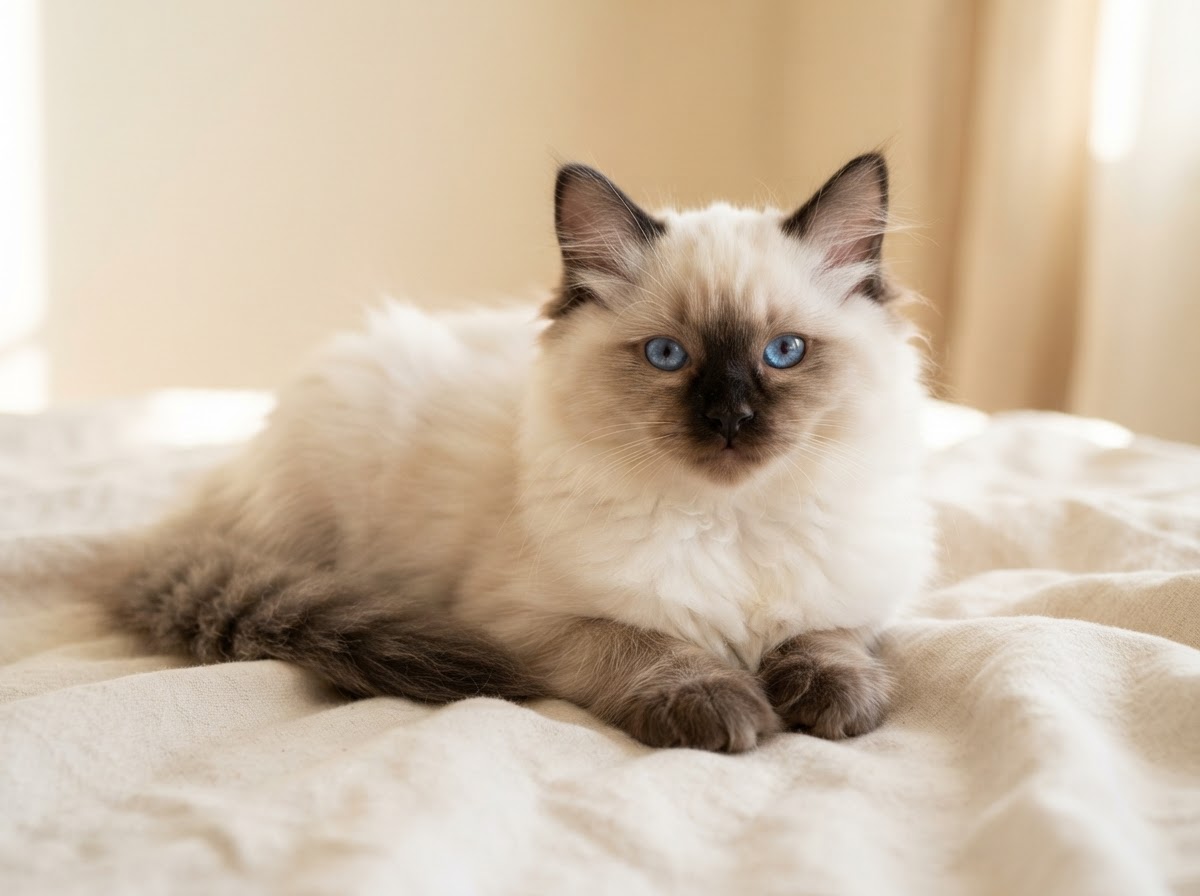
Seal point Ragdoll kitten with blue eyes and semi-long fluffy coat in warm light

Key Takeaways

  • The Ragdoll a ragdoll is a large, sturdily built cat with a semi-long, silky coat and a bushy plumed t...
  • Ragdolls are calm, affectionate, and people-oriented. They often follow family members around the home, greet people at
  • Health screening: ask any cattery for the HCM and PKD history of a kitten's parents before you reserve.
  • Ragdoll kitten price, with prices typically starting around $2,000, reflects HCM and PKD screening, veterinary care, and selective family placement rather than color alone.

Origin

The Ragdoll was developed in the United States in the 1960s from cats with a long, soft coat and a notably relaxed, docile disposition. The breed name comes from the tendency of relaxed Ragdolls to go limp when picked up, which is a temperament trait rather than a physical one.

Appearance, Colors and Patterns

A Ragdoll is a large, sturdily built cat with a semi-long, silky coat and a bushy plumed tail. The breed is a pointed cat, meaning the body is lighter and the face, ears, legs, and tail are darker. The eyes are always blue. Common patterns include colorpoint, mitted, and bicolor, and recognized point colors include seal, blue, chocolate, and lilac.

Personality

Ragdolls are calm, affectionate, and people-oriented. They often follow family members around the home, greet people at the door, and enjoy being held. They are one of the more docile breeds and tend to get along well with respectful children and other pets.

Health and Genetic Screening

Responsible Ragdoll breeders screen breeding cats for hypertrophic cardiomyopathy (HCM), which has a genetic component in the breed, using an echocardiogram read by a veterinary cardiologist. Ragdolls can also be affected by polycystic kidney disease (PKD), so PKD-clear lines are a responsible breeding consideration. Ask for the HCM and PKD screening history of a kitten's parents.

Grooming and Care

The semi-long coat needs brushing two to three times a week to prevent tangles and mats, especially around the belly and behind the ears. Ragdolls shed moderately, and regular grooming keeps the coat soft and loose-hair free.

Is This Breed Right for Your Home?

A Ragdoll suits families who want an affectionate, interactive companion and who have time for regular grooming. They do well in homes where someone is around often, and they are a strong fit for families with children or other calm pets.

Ragdoll Kitten Price

Ragdoll kitten price, with prices typically starting around $2,000, reflects HCM and PKD screening, veterinary care, and selective family placement rather than color alone. See our Ragdoll kitten styles to ask about available kittens, or read our health and delivery guide for what screening and handoff include.

Interested in a Ragdoll kitten?

Ask about available Ragdoll kittens and we'll share photos, videos, and health records.

Ask About a Ragdoll Kitten

Ragdoll FAQ

Do all Ragdoll kittens have blue eyes?

Yes. Blue eyes are a defining breed trait. The depth of the blue can vary, but every Ragdoll has blue eyes.

Are Ragdolls really that relaxed?

Many Ragdolls are notably calm and go limp when held, which is a real temperament trait. Individual personalities vary, but the breed is known for being docile and easy to handle.

How much grooming does a Ragdoll need?

Two to three brushes a week, plus attention to the belly and behind the ears where tangles form. The coat is silky and less prone to matting than some longhaired breeds, but it still needs regular care.

Read more

Explore the other breed guides we offer in North Carolina.

Ask About a Kitten

Tell us what you're looking for and we'll share available kittens, photos, and health records.

Ask About a Kitten